Essentialism: A Summary of the Disciplined Pursuit of Less
One of my favorite books — Greg McKeown’s case for doing less but better: the mindset, then the three steps, explore, eliminate, execute.
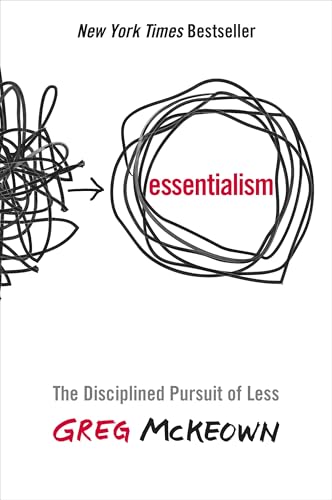
Essentialism
Greg McKeown · The Disciplined Pursuit of Less · Crown Business, 2014
Get the book on AmazonEssentialism is one of my favorite books. It reminds me of simplicity, one of my core values, and it challenges me to focus and put my energy behind the things that are core to me. This website is one of them.
Greg McKeown’s argument is that the way to make your highest contribution isn’t to do more; it’s to do less, but better. The Essentialist isn’t someone who gets more things done. It’s someone who gets the right things done, on purpose, instead of letting everyone else’s priorities fill the calendar.
It sits very close to the idea at the heart of my own book, Enough: that less, chosen well, is where a good life lives. McKeown’s key line is a simple swap in language: stop saying “I have to” and start saying “I choose to.”
The Quick Summary
The Essence: the Essentialist mindset
Explore: discern the trivial many from the vital few
Eliminate: cut out the trivial many
Execute: make it effortless
Essentialism, Explained
The Essence: the Essentialist mindset
- Choose. Your ability to choose can’t be taken away, only forgotten. If you don’t prioritize your life, someone else will.
- Discern. Almost everything is noise, and a very few things are exceptionally valuable. The Essentialist assumes most opportunities are trivial and looks hard for the vital few.
- Trade off. You can’t have it all or do it all. Instead of asking “How can I do both?”, ask “Which problem do I want?” and make the trade-off on purpose.
Explore: discern the trivial many from the vital few
- Escape. Create space to think. Block time on the calendar just to reflect, read and see the bigger picture — focus doesn’t just happen, you have to make room for it.
- Look. Be a journalist of your own life: look past the noise for what really matters. Keep a journal, notice what’s changing, and ask what the lead story is.
- Play. Play isn’t trivial; it fuels creativity, broadens what we see as possible and lowers stress. Make room for it.
- Sleep. Protect the asset. Your best contribution depends on you being rested; one more hour of work often costs more than it earns.
- Select. Use extreme criteria. McKeown’s 90 percent rule: rate an option from 0 to 100, and if it isn’t a 90 or above, treat it as a zero. If it isn’t a clear yes, it’s a clear no.
Eliminate: cut out the trivial many
- Clarify. Set an essential intent: one concrete, inspiring goal that makes a thousand later decisions for you, so you know when you’re done.
- Dare. Learn the graceful “no.” Separate the decision from the relationship; people respect a clear, kind no more than a resentful yes.
- Uncommit. Win big by cutting your losses. Watch out for sunk-cost thinking and ask: if I weren’t already doing this, how much would I work to start?
- Edit. Like a good editor, cut, condense and correct. Subtracting is what makes what’s left clear.
- Limit. Set boundaries ahead of time, so you don’t have to fight the same battle every time someone asks for a piece of your day.
Execute: make it effortless
- Buffer. Plan for the unexpected. Add slack to estimates and prepare for things going wrong, because they will.
- Subtract. Instead of adding more effort, find the one obstacle slowing everything down and remove it.
- Progress. Start small and celebrate small wins. Steady visible progress is the most motivating thing there is.
- Flow. Design routines that make the essential the default, so it happens without having to decide every time.
- Focus. Ask what’s important now. Get present, and do one thing at a time. The final chapter, Be, sums it up: essentialism isn’t something you do once; it becomes who you are.
Resources
- Essentialism on Amazon
- Greg McKeown’s website
- Enough, my own book on having and doing less, free to download
- More of my book summaries and reviews on Resources