The Pathless Path, Summarized
Paul Millerd’s book for anyone who did everything right and still feels like something is off. The big ideas first, then all ten chapters.
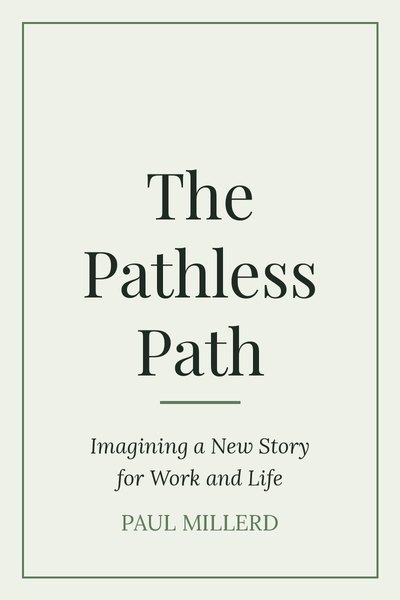
The Pathless Path
Paul Millerd · Imagining a New Story for Work and Life · Pathless Publishing, 2022
Get the book on AmazonPaul Millerd had the career people are told to want. He was a strategy consultant with a big salary, working with CEOs, with the next promotion always in view. And the higher he climbed, the less alive he felt. The Pathless Path is the story of how he walked away, and what he learned about work, money and meaning once he did.
He published it himself in 2022, and it has spread mostly by word of mouth, one reader handing it to the next. It isn’t a how-to-quit manual. It’s a book about stories: the one we inherit about how a good life is supposed to go, and the new one we can write when that story stops fitting.
One of its chapters is called Find Your Enough, which is the same question my own book Enough is built around. If that question is on your mind too, this is a good companion.
The Big Ideas
- The default path. The script most of us are handed: good grades, a good college, a good job, promotions, a house, retirement. Nobody forces it on us, but it’s so common it feels like the only option.
- The pathless path. Not a new script to follow, but an attitude: accepting uncertainty and discomfort, and letting go of the need for a map before you move.
- Coming alive over getting ahead. Swap the question “how do I get ahead?” for “what makes me feel most alive, and how can I do more of it?”
- Enough. Once you decide how much is enough, money becomes a tool for freedom instead of a scoreboard.
- Find the others. Nobody walks it alone. The people doing things differently are out there, and finding them makes the leap feel possible.
The Quick Summary
Part One: The Default Path
- Introduction: the default path, and why it matters
- Getting Ahead: chasing prestige and the inner ring
- Work, Work, Work: where our beliefs about work come from
- Awakening: the pebble in your shoe
- Breaking Free: leaving, and mourning who you were
- The First Steps: prototype the leap and find the others
Part Two: The Pathless Path
- Wisdom of the Pathless Path: rest, play, money and faith
- Redefine Success: bad tests, bad eggs and enough
- The Real Work of Your Life: being creative and useful
- Playing the Long Game: coming alive over getting ahead
The Ten Chapters, Explained
Part One: The Default Path
- Introduction. Millerd lays out the default path, the set of life milestones our culture treats as normal, and says the problem isn’t that it’s wrong. It’s that it’s presented as the only way. When it’s the only story we know, we can’t even see that we’re choosing it. The book’s aim is to offer another story.
- Getting Ahead. His own story: a world-class hoop-jumper who kept winning the next prize, from school to strategy consulting to business school. He borrows C.S. Lewis’s idea of “the inner ring,” the endless urge to get inside the next exclusive circle, and shows how chasing prestige kept him busy without making him happy. A health scare in business school cracked the story open.
- Work, Work, Work. Why do we believe a job should be the center of our lives? Millerd traces the belief back and finds it’s newer and stranger than it seems. Our “wage-based society” counts only paid work as real work, and even the promise of “meaningful work” can become a trap that keeps people grinding for an employer’s mission instead of their own.
- Awakening. Change rarely arrives as one big moment. It shows up as a pebble in your shoe: a small, daily discomfort you can ignore for a long time but can’t forget. Millerd describes living with that pebble, pushing through anyway, and finally asking what he was actually worth outside of a job title.
- Breaking Free. Leaving is harder than it looks from the outside. He writes honestly about burnout, about “commuting in the blob” of a life that looked fine, and about the grief of leaving: you aren’t just quitting a job, you’re mourning an identity. On the far side of that mourning is possibility.
- The First Steps. You don’t have to jump off a cliff. Prototype the leap first: take time off, run small experiments, try the life before you commit to it. Let wonder tip the scales, find the others who are already living differently, tame your fears by naming them, and trust that the people who love you will still love you.
Part Two: The Pathless Path
- Wisdom of the Pathless Path. What he learned once he was out: the power of non-doing and real rest, the mistake of saving all your joy for retirement, the value of having fun along the way, a new relationship with money (as a way to buy time and freedom rather than status), and a little faith that things will work out if you keep moving.
- Redefine Success. Most of the tests we’re graded on are bad tests: prestige, titles, what the neighbors think. Millerd invites us to write our own definition of success, find a tribe that shares it, accept being the “bad egg” who doesn’t fit the old mold, find our enough, and move past a scarcity mindset.
- The Real Work of Your Life. Your real work isn’t necessarily your job. Look for the conversation you keep wanting to be part of, design your days so you actually like your work, remember the things you loved before you got serious, and believe that you’re creative. Ask who you want to serve. Meaningful work feeds on itself: the more you do it, the more it gives back.
- Playing the Long Game. Work backward from the life you want, not forward from the job you have. Freedom isn’t only freedom from things; it’s freedom to build something. Expect to reinvent yourself more than once, embrace abundance, create your own culture with the people around you, and choose coming alive over getting ahead. When in doubt, go find out.
Resources
- The Pathless Path on Amazon
- Paul Millerd’s site (pathlesspath.com, with his newsletter and podcast)
- My book Enough, free to download
- Anything You Want by Derek Sivers, another favorite on building a life and work on your own terms
- More of my book summaries and reviews on Book reviews